
SERM Management: Search Engine Reputation Management.
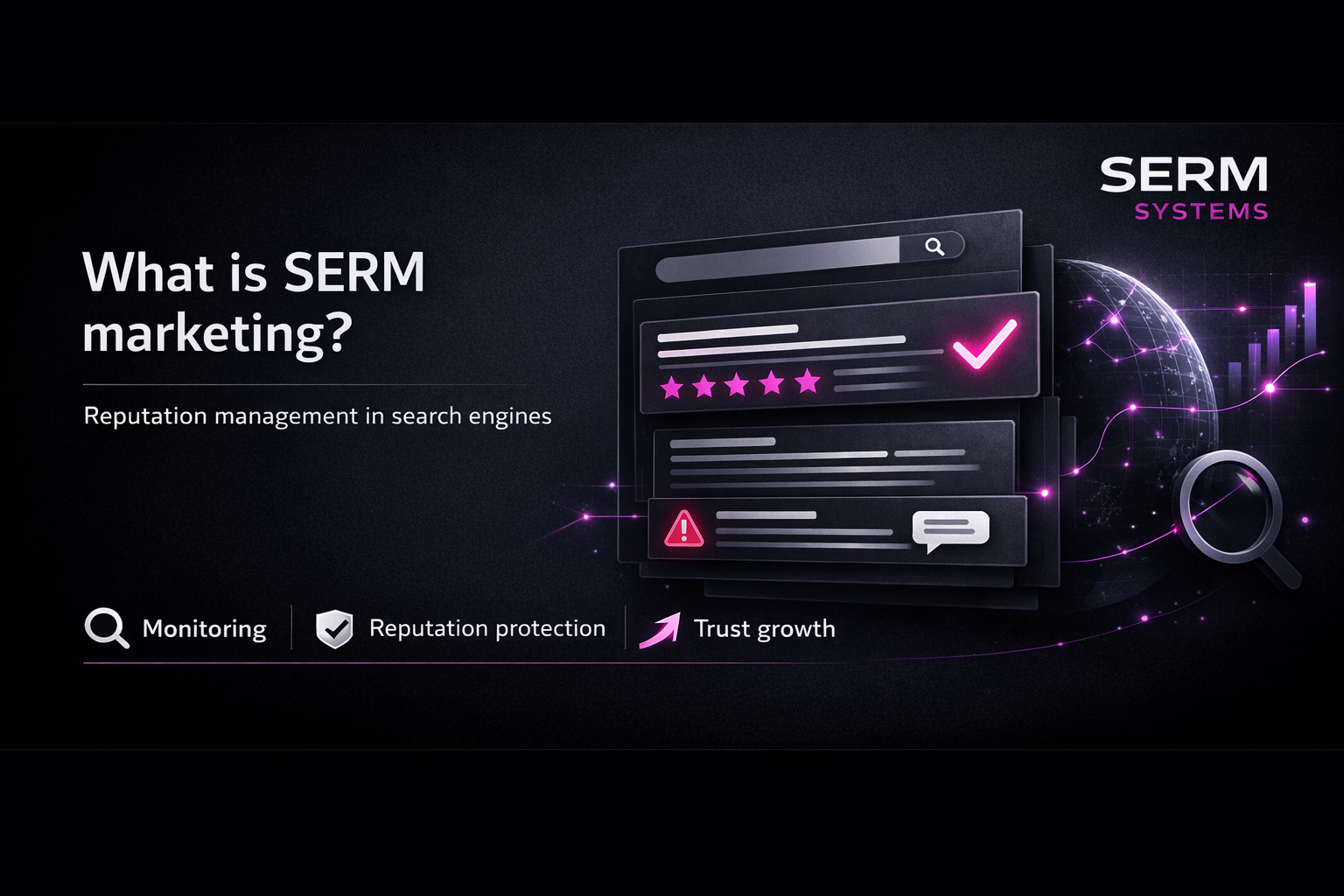
Why SERM Management is Important for Business
Have you ever thought about where the dialogue with your future client actually begins?
Most often, not with a beautiful website, but with a simple search bar.
In the search engine results, among links and reviews. The first and most important impression of your brand is formed.
A Fact That Makes You Think About SERM Management
93 out of 100 people check information online before deciding on a deal. What is written and shown about you in search directly impacts your profit. In these conditions, reputation management is no longer “paperwork,” but an investment in consumer trust.
In this context, SERM (Search Engine Reputation Management) is of key importance. SERM marketing becomes a fundamental approach to doing business. Openness and constructive dialogue with the audience are mandatory conditions for building sustainable relationships.
We view SERM both as a necessity in the competitive digital environment and as a unique opportunity to create a solid foundation of trust.
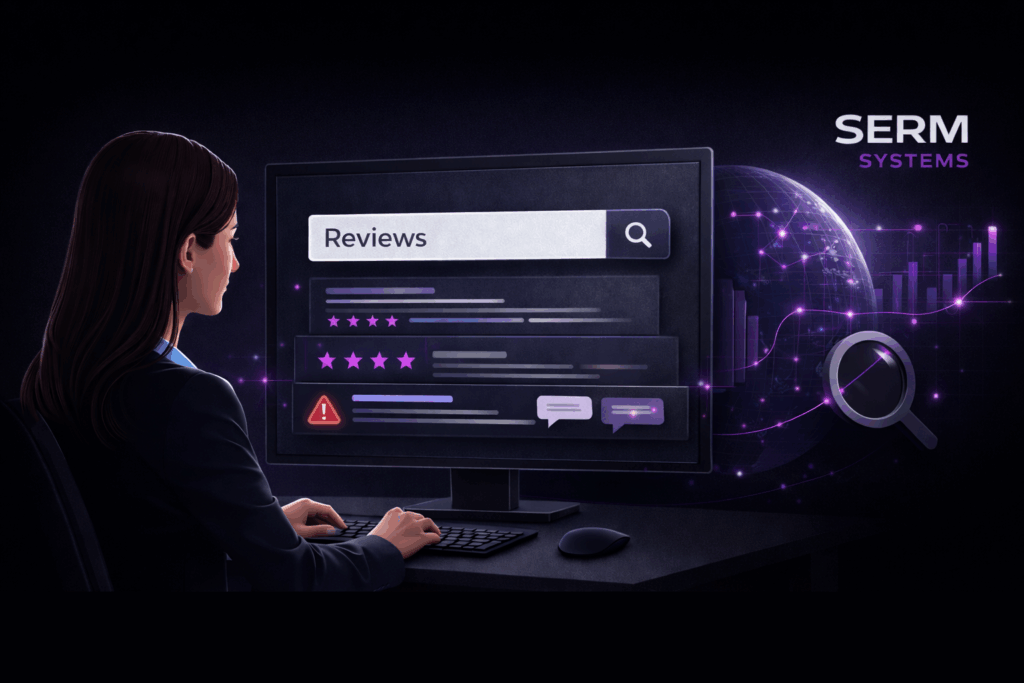
SERM Management vs. ORM: Focus on the Decision Point
Imagine that ORM is the general atmosphere and rumors in the city about your company, while SERM is the display window of your main store on the central street. 93% of visitors see it first.
SERM allows you to thoughtfully design this display window – the search results – at the very moment when a person is purposefully searching for you or your services. The top lines of search results form the decisive initial opinion.
Key Elements of the SERM Management Landscape:
- Organic search results for the company name and key queries
- Reviews and ratings on Google Maps, Yandex.Business, and review sites
- Social media (mentions on social networks, discussions)
- News publications and articles in the media
- Thematic forums and professional communities
Why We Consider SERM Management a Strategic Asset: Business Logic and Our Principles
Search as a Trust Showcase
Understanding that 85% of users don’t go beyond the first page of results, we treat the search results as the main showcase of your brand. Our goal is to ensure that the first impression is complete, honest, and reflects your true values.
Reputation as a Conversion Driver
Data shows: a positive digital portrait increases conversion by 44%. We invest in SERM because trust, backed by independent reviews and quality content, directly influences customers’ willingness to work with you.
Proactivity Instead of Reactivity
We perceive SERM not as a “fire brigade” for removing negativity, but as a system for constantly forming a positive digital presence. This allows us not only to defend but also to actively shape the narrative, highlighting your strengths and achievements.
Dialogue as the Basis for Improvement
Every review is feedback. We systematically work with customer opinions because we see constructive criticism as an opportunity for development and gratitude as confirmation of the right course.
Technology in the Service of Transparency
We use structured data (Schema.org), optimize profiles in business directories, and work with local SEO to make information about you as accessible, accurate, and useful as possible.
Our Practice: How We Build a Reputation Management System
Audit and Monitoring:
- Regular analysis of search results and key metrics.
- Monitoring mentions across all significant digital sources.
- Sentiment analysis and identification of key themes.
Creation and Amplification of Positive Content:
- Developing official channels (website, blog, social media) as sources of reliable information.
- Publishing case studies, expert articles, and news that address audience questions.
- Working with business and industry media.
Dialogue and Engagement:
- Mandatory and professional responses to reviews (both positive and negative).
- Publicly resolving issues and thanking for feedback.
- Participating in professional discussions as experts.
Analysis and Development:
- Measuring the impact of SERM activities on business metrics (trust, conversion, loyalty).
- Regularly adjusting strategy based on data.
Measurable Results and Long-Term Benefits
By implementing a systematic approach to SERM, we observe and aim for the following results:
- Growth in Trust: Increased level of trust in the brand from the audience.
- Enhanced Resilience: Reduced reputational risks and damage from potential crises.
- Improved Visibility: Strengthened positions not only for branded but also for commercial queries.
- Customer Loyalty: Strengthened relationships with the existing audience through openness and dialogue.
Conclusion: SERM Management as a Culture, Not a Campaign
For our company, SERM is a culture of responsibility for the digital footprint and a commitment to clients. We understand that in the era of digital transparency, reputation is built daily by every our action, project, and response.
Consider investing in search engine reputation management as one of your most important long-term strategies. On par with product and service development. Because ultimately, your reputation in search is not just lines in the search results, but a reflection of your professional creed and the foundation for sustainable relationships with clients and partners.